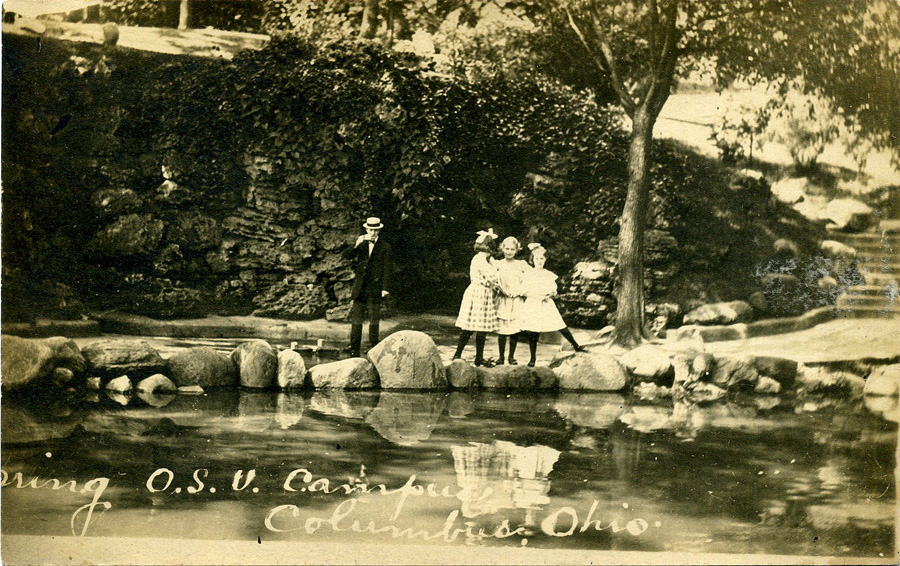
Three young girls pose for a photo while their father enjoys a cold drink from the spring in this c. 1910 RPPC of Mirror Lake. |
|||
VINTAGE VIEWS: MIRROR LAKE
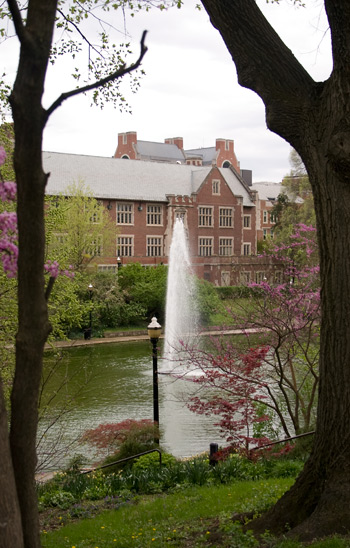
The floodgates opened and Americans sent postcards by the hundreds of millions. The tide didn’t abate until after the First World War. Views of the Ohio State University area were an obvious subject for postcards. The university was a major landmark and point of pride for Columbus residents. As the state capitol, home of the state fair, and destination for all sorts of conferences and expositions, Columbus received thousands of visitors each year. These visitors wanted to share what they had seen and the university was an obligatory stop for sight-seers. Ohio State students were a natural market for postcard manufacturers. They wanted to stay in touch with faraway friends and family. Busy students, however, found it hard to write letters as often as they would have liked. A paragraph on the back of a postcard let them stay in touch and ask for money without devoting an afternoon to drafting a letter. Postcards also mailed for half the price of a letter--important to financially strapped collegians. As a bonus, picture postcards let them show all the folks back home what life was like at state university. Mother and father, sister Sarah, Grandma, Aunt Eugenia, and Cousin Mabel could see where they lived, where they studied, and where they played. Mirror Lake (or The Spring as it used to be called) is the principal natural beauty spot on campus and, as such, was a popular subject of early 20th Century picture postcards such as these. So have a look, read the messages, and step back a century or so to see how much has changed and how much has stayed the same. |
 |
||

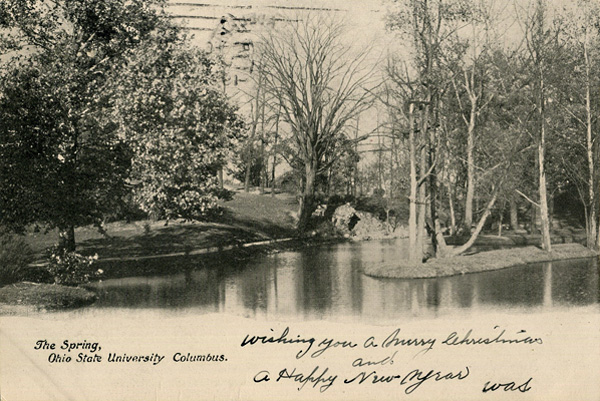 |
Wishing you a Merry Christmas and a Happy New Year.
Mirror Lake Hollow viewed from the southwest. Late afternoon, judging from the light and shadows. Photographed in fall or early spring. Many trees are bare. Grotto near the spring looks almost like a cave entrance.
|
|
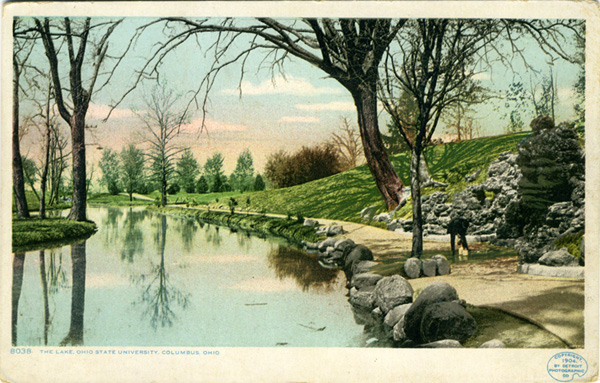 |
No message. Nice colors on this card. There's a tendency among postcard colorists to use a pastel palette out of an Easter basket. Note the man filling stoneware water jugs from The Spring. Also note the absence of Campbell Hall to the west. It wouldn't be built for another dozen years.
|
|
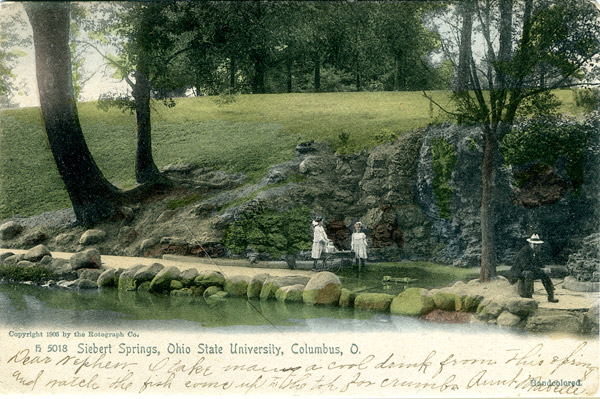 |
Dear Nephew, I take many a cool drink from this spring and watch the fish come up to the top for crumbs.
Really like this one. I like the font. I like the colors and the hazy quality of the light. I like the "slice-of-life" feel. The two charming little girls have a wagon and some sort of coffee pail they've been filling from the spring. I assume that's their father sitting there to the right.
|
|
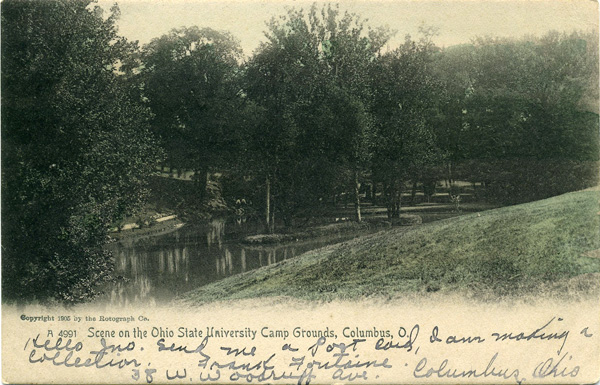 |
Hello Jno. Send me a post card, I am starting a collection.
Beautiful view of the Mirror Lake hollow from the southwest. Puzzling thing: Why does the caption read "Scene on the Ohio State University Campgrounds?" Campgrounds? What campgrounds? Did they mean "Campus?"
|
|
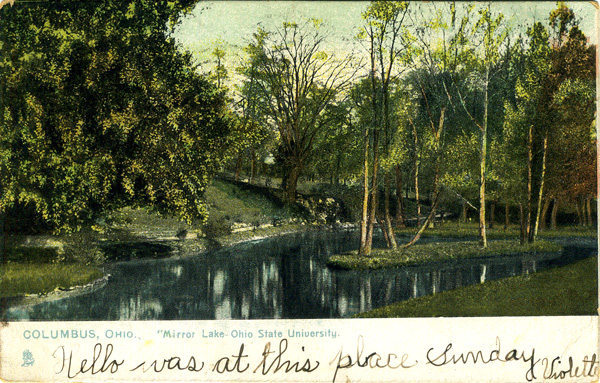 |
Hello, was at this place Sunday. Violette.
Text on card reads: MIRROR LAKE-OHIO STATE UNIVERSITY. The 300 acres belonging to the Ohio State University are among the most attractive. Beautifully laid-out, for horticultural and botanical purposes, they are more more interesting than their natural beauty of forest and stream would render them. There is an extensive athletic course for the 1,600 men and women students.
|
|
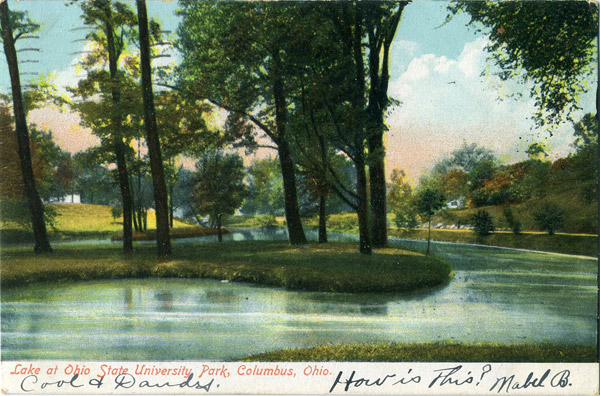 |
Cool and dandy. How's this?
Mabel B. was proud to show the folks back home in Southwestern Ohio a view of the lake at her alma mater.
|
|
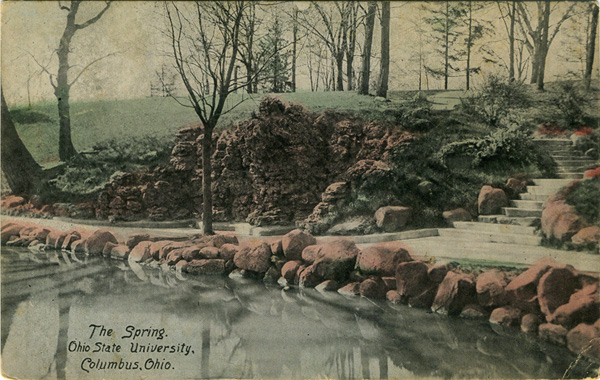 |
View of The Spring with a close-up of The Grotto. Not much different than it appears today but note the absence of Main Library up on the hill. Not sure why the postcard tinter went for the pastel treatment and pink boulders.
|
|
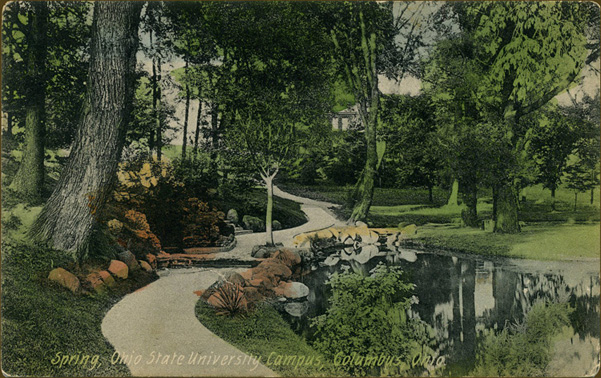 |
I am getting along fine. I would rather be out west of Circleville though.
Uncommon view looking east, up Mirror Lake Hollow. Cave-like Grotto and The Spring are on the left. Building peaking through the trees is Orton Hall (built 1893). Notice the difference between this and the earlier cards above. A March 1907 postal regulation change allowed mailers to write on the reverse (address) side of the postcard so room for text on the front was no longer needed.
|
|
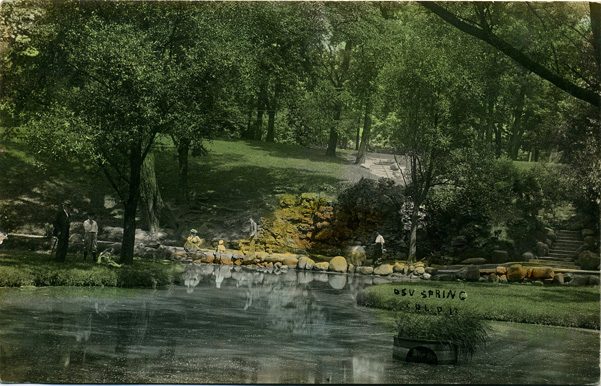 |
Got through both of my Physics and Mech all right. You got a (M) in Mech. (94) on exam. I am going to work {at} the Adams Express Company during my vacation. begin to-morrow morning at [6 o'clock] and work until 6 P.M. How do you like the hours, I am not stuck on them. Wishing you a Merry Xmas + Happy New Year.
Children, adults, and the elderly enjoying a summer afternoon in verdant Mirror Lake Hollow.
|
|
 |
Hello Cousin-- How are you? School is OK and they are making us work harder than ever. The pictures of Rosa H___ are no good. The films were bad so they are all spoiled.
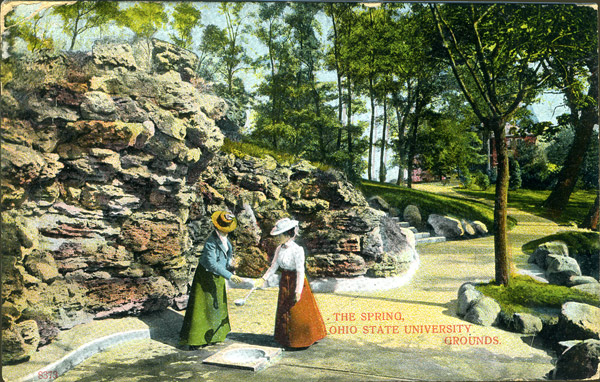
Two fashionable ladies take a drink from the spring with a dipper. Wonder if they brought it from home or if there was always one there?
|
|
 |
Why is it you don't write nothing... I don't know what to think, do I?
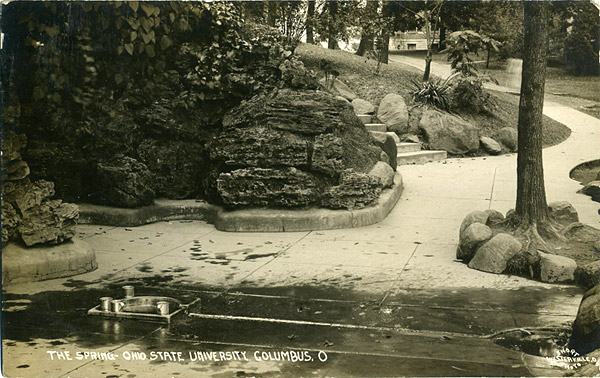
Close-up of The Grotto and The Spring. Grotto looks like a cave entrance with vines draped over it. Four tin cups rest on the rim of The Spring for thirsty passers-by. In the background, some of Orton Hall can be seen. Ghostly blur disappearing behind tree is probably a student who wandered into the shot. |
|
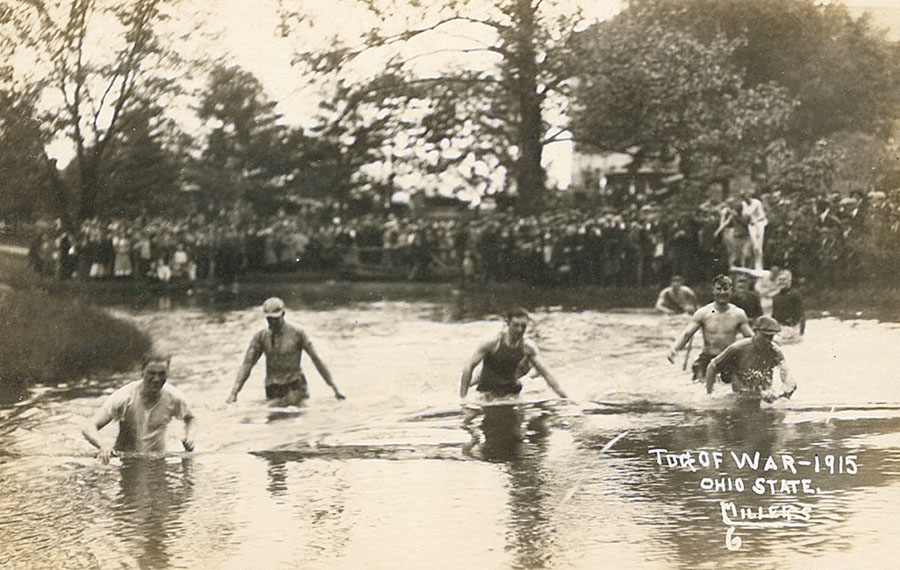
An end-of-the-year tug-of-war between the Frosh and the Sophomores across Mirror Lake was an Ohio State tradition in the early 20th Century. The losing side got pulled into the water. On May 27, 1915, the Sophs appeared to have won and pulled the frosh into the lake. Victory was overturned on review when it was discovered the the Sophs had packed their side with more than the permitted number of men. |
||
 |
||